Welcome to The Canterbury Tales (The Book of the Tales of Canterbury), a complete and unabridged online edition of Geoffrey Chaucer’s work in its original Middle English, alongside a transcript that modernises the spelling into that of the Oxford English Dictionary, includes a tooltip glossary for unfamiliar words and phrases, and links to Wikipedia throughout the General Prologue and one or two of the more popular tales – as demonstrated below, in Chaucer’s Ballade.
You are welcome to read the complete work online for free, the General Prologue, Knight’s Tale and Shipman’s Tale are publicly available, the remaining Canterbury Tales require you to complete a simple registration. If you wish to record, copy or print the work out, please request permission here.
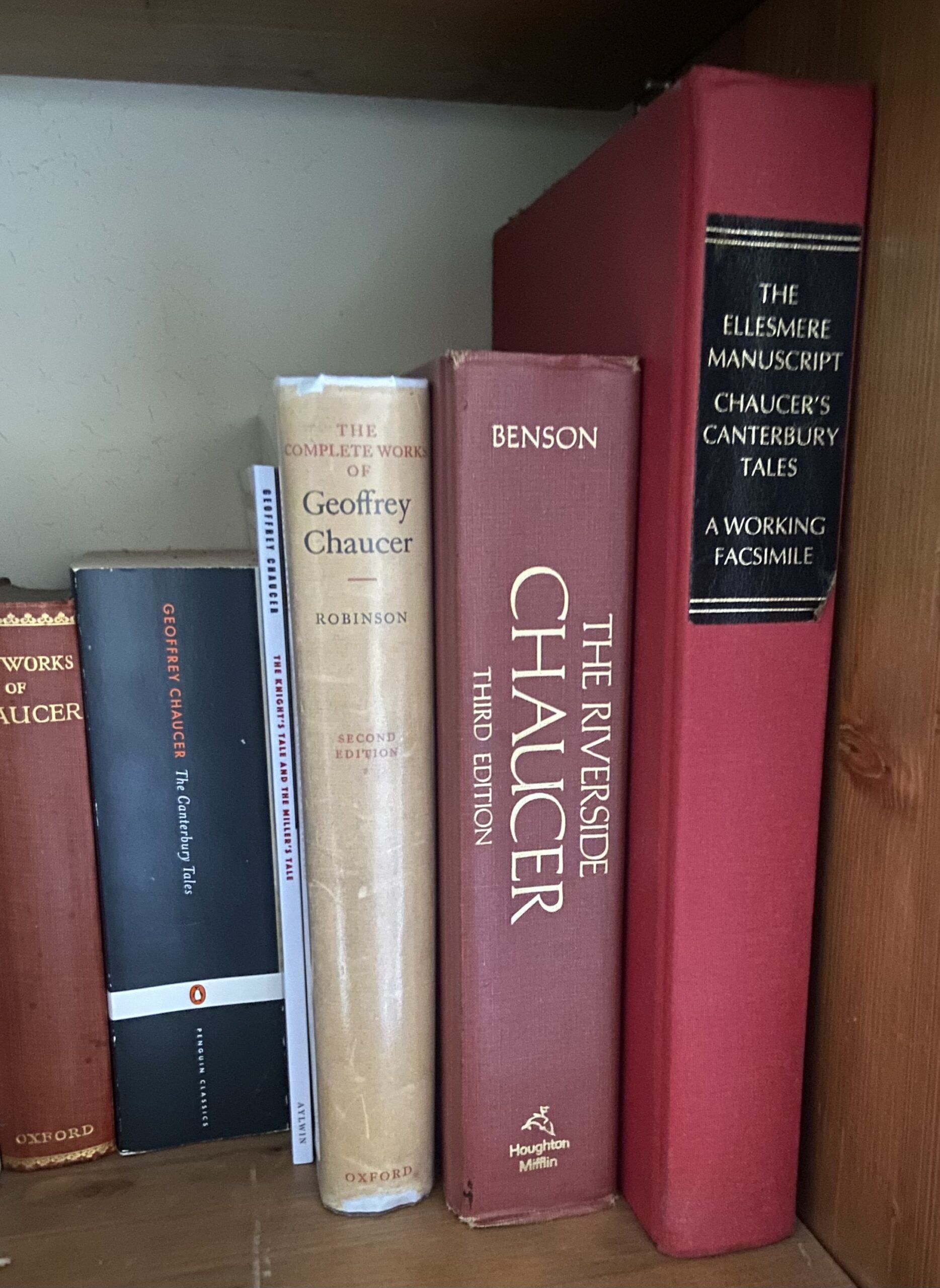
If you enjoy the work the first two tales are available for purchase, as an eBook; The Knight’s Tale and the Miller’s Tale: A Modern-Spelling Edition (£5.99), or formatted as a script, in paperback; The Knight’s Tale and the Miller’s Tale: A Dramatised Edition in Modernised Spelling (£10.50).
The Oxford English Dictionary, available at OED.com (with a subscription), and Wiktionary (which is a really good alternative) were used extensively.
W. W. Skeat’s Middle English Glossarial Index (A-D) (E-K) (L-R) (S-Z), and Index of Proper Names were also used, and are available online at Wikisource, as were editions of Geoffrey Chaucer by W. W. Skeat, F. N. Robinson, and Larry D. Benson.
The Middle English text is from W. W. Skeat’s The Complete Works of Geoffrey Chaucer (Wikisource).

Middle English
Balade to Rosemounde
Madame, ye ben of al beautè shryne
As fer as cercled is the mappemounde;
For as the cristal glorious ye shyne,
And lyke ruby ben your chekes rounde.
Therwith ye ben so mery and so iocounde,
That at a revel whan that I see you daunce,
It is an oynement unto my wounde,
Thogh ye to me ne do no daliaunce.
For thogh I wepe of teres ful a tyne,
Yet may that wo myn herte nat confounde;
Your seemly voys that ye so smal out-twyne
Maketh my thoght in Ioye and blis habounde.
So curteisly I go, with lovë bounde,
That to my-self I sey, in my penaunce,
Suffyseth me to love you, Rosemounde,
Thogh ye to me ne do no daliaunce.
Nas never pyk walwed in galauntyne
As I in love am walwed and y-wounde;
For which ful ofte I of my-self divyne
That I am trewe Tristan the secounde.
My love may not refreyd be nor afounde;
I brenne ay in an amorous plesaunce.
Do what you list, I wil your thral be founde,
Thoghe ye to me ne do no daliaunce.
Tregentil—-//—-Chaucer.
Modern Spelling
Ballade to Rosemounde
Madame, ye been of all beauty shrine
As far as circled is the mappemonde;
For as the crystal glorious ye shine,
And like ruby been your cheeks round.
Therewith ye been so merry and so jocund
That at a revel when that I see you dance,
It is an ointment unto my wound,
Though ye to me ne do no dalliance.
For though I weep of tears full a tine,
Yet may that woe mine heart not confound;
Your seemly voice that ye so small out-twine
Maketh my thought in joy and bliss abound.
So courteously I go, with love bound,
That to myself I say, in my penance,
Sufficeth me to love you, Rosemounde,
Though ye to me ne do no dalliance.
Nas never pike wallowed in galantine
As I in love am wallowed and y-wound;
For which full oft I of myself divine
That I am true Tristan the second.
My love may not refreid be nor afound;
I bren aye in an amorous pleasance.
Do what you list, I will your thrall be found,
Though ye to me ne do no dalliance.
Tregentil ——//—— Chaucer
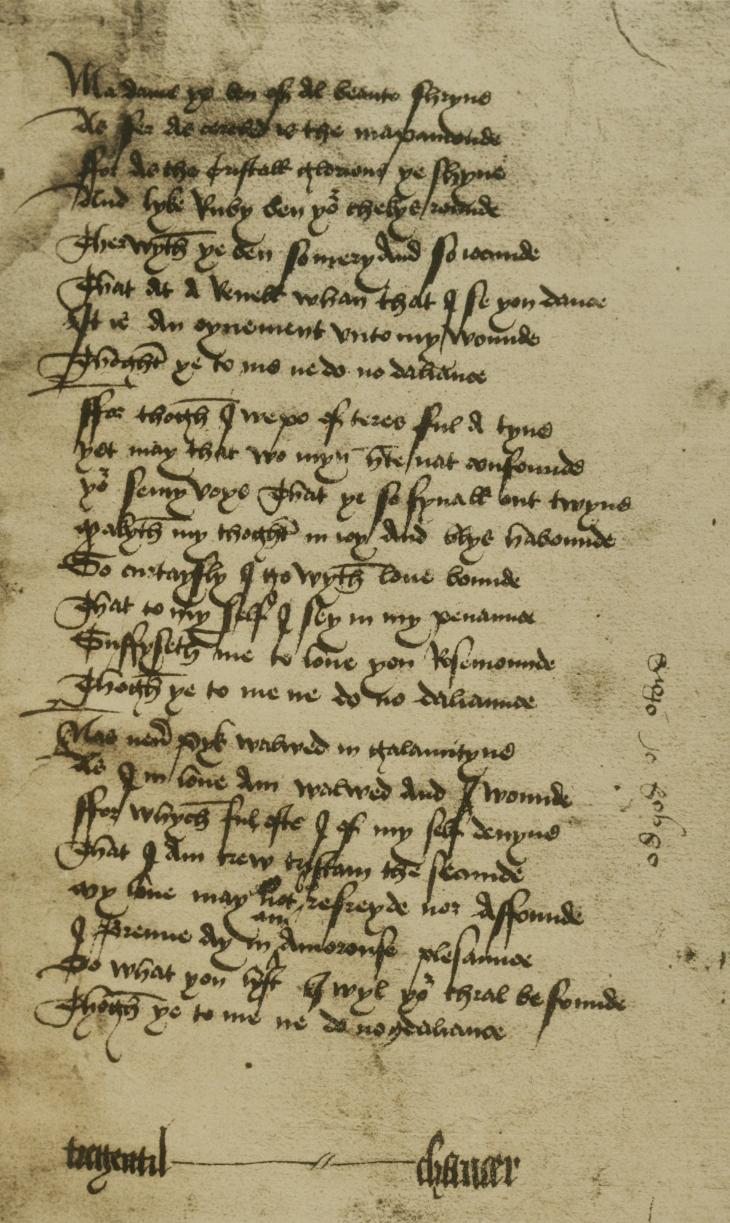
Middle English
Balade to Rosemounde
Madame, ye ben of al beautè shryne
As fer as cercled is the mappemounde;
For as the cristal glorious ye shyne,
And lyke ruby ben your chekes rounde.
Therwith ye ben so mery and so iocounde,
That at a revel whan that I see you daunce,
It is an oynement unto my wounde,
Thogh ye to me ne do no daliaunce.
For thogh I wepe of teres ful a tyne,
Yet may that wo myn herte nat confounde;
Your seemly voys that ye so smal out-twyne
Maketh my thoght in Ioye and blis habounde.
So curteisly I go, with lovë bounde,
That to my-self I sey, in my penaunce,
Suffyseth me to love you, Rosemounde,
Thogh ye to me ne do no daliaunce.
Nas never pyk walwed in galauntyne
As I in love am walwed and y-wounde;
For which ful ofte I of my-self divyne
That I am trewe Tristan the secounde.
My love may not refreyd be nor afounde;
I brenne ay in an amorous plesaunce.
Do what you list, I wil your thral be founde,
Thoghe ye to me ne do no daliaunce.
Tregentil—-//—-Chaucer.
Modern Spelling
Ballade to Rosamond
Madame, ye been of all beauty shrine
As far as circled is the mappemonde;
For as the crystal glorious ye shine,
And like ruby been your cheeks round.
Therewith ye been so merry and so jocund
That at a revel when that I see you dance,
It is an ointment unto my wound,
Though ye to me ne do no dalliance.
For though I weep of tears full a tine,
Yet may that woe mine heart not confound;
Your seemly voice that ye so small out-twine
Maketh my thought in joy and bliss abound.
So courteously I go, with love bound,
That to myself I say, in my penance,
Sufficeth me to love you, Rosamond,
Though ye to me ne do no dalliance.
Nas never pike wallowed in galantine
As I in love am wallowed and y-wound;
For which full oft I of myself divine
That I am true Tristan the second.
My love may not refreid be nor afound;
I bren aye in an amorous pleasance.
Do what you list, I will your thrall be found,
Though ye to me ne do no dalliance.
Tregentil ——//—— Chaucer